Seollal and Chuseok, Korea's big holidays, explained
Seollal and Chuseok are Korea's two biggest holidays. What they mean, the food and rituals, 2026 dates, and how to travel when the whole country moves.
By Jae Park · Updated Jul 14, 2026
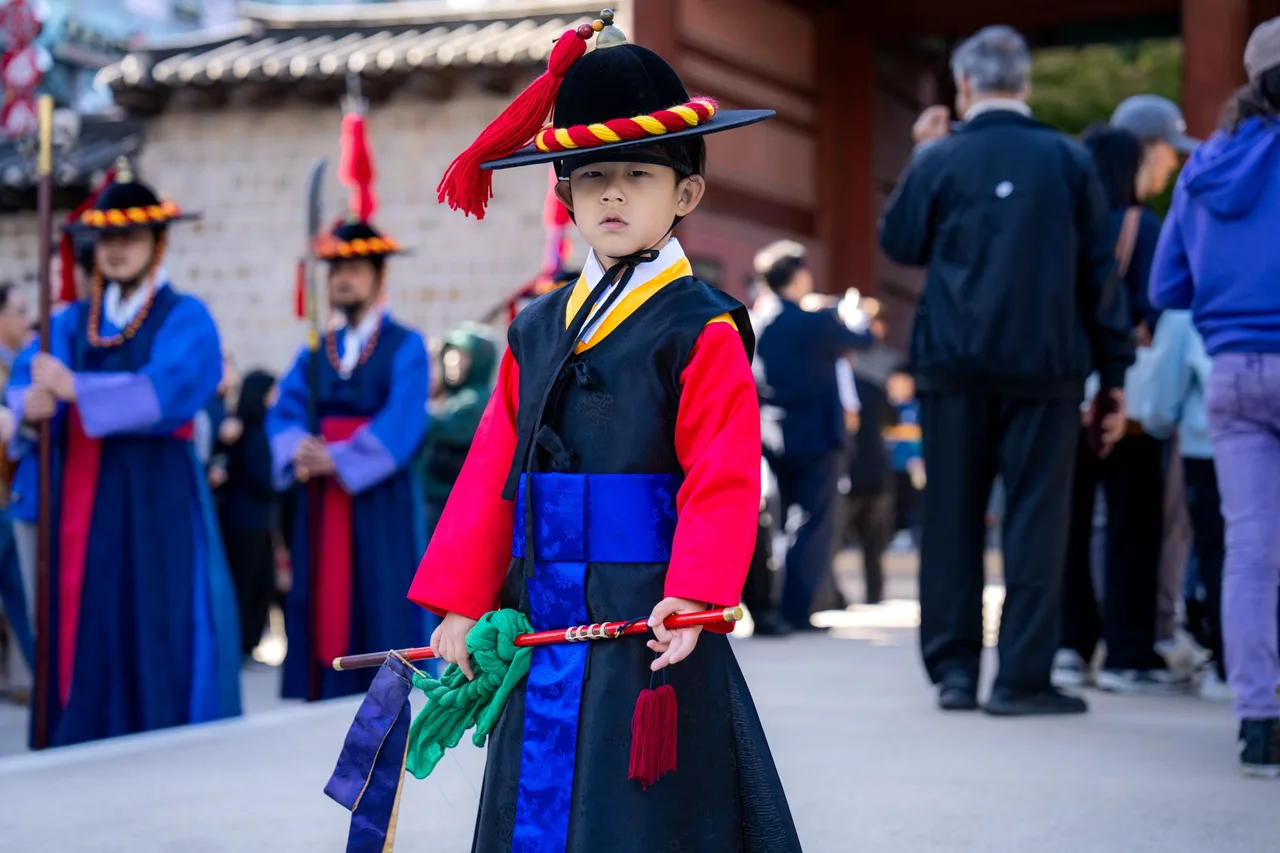
If you have watched enough K-dramas, you have already sat through this scene without knowing its name. The whole family squeezes into a small apartment, everyone dressed in hanbok, and the kids drop all the way to the floor in a deep bow while the grandparents beam and hand over crisp envelopes of cash. *Reply 1988* practically runs on mornings like that. The bow has a name, sebae, and it belongs to Seollal, one of two holidays that quietly empty Korea's cities and jam its highways once a year.
The other is Chuseok. These are the days when Koreans actually go home, when Seoul thins out to the point that you can hear your own footsteps in Myeongdong, and when a foreign visitor can feel either wonderfully lucky or completely stranded depending on how well they planned. I have spent both versions of that holiday in Korea, and I want to save you the stranded one.
Two holidays, one rhythm
Seollal (설날) is Lunar New Year. Chuseok (추석) is the autumn harvest celebration, often translated as Korean Thanksgiving, though it predates the American one by a very long stretch. Both follow the lunar calendar, so the dates shift every year on the Western calendar, which trips up a lot of first-time visitors.
The rule is fixed even if the date is not. Seollal lands on the first day of the first lunar month, and Chuseok on the fifteenth day of the eighth lunar month, which is always a full-moon night. Each becomes a three-day public holiday: the day before, the day itself, and the day after. In 2026 Seollal falls on Tuesday, February 17, with the holiday running February 16 to 18, and it opens the Year of the Horse (병오년, byeongo). Chuseok 2026 lands on Friday, September 25, with the main holiday spanning September 24 to 26, though a substitute day off can stretch it. Because the government sometimes adds those substitute holidays, always confirm the exact dates for your year on an official source like the Korea Tourism Organization before you book anything.
The two holidays share a spine. Both are about family and about the dead as much as the living. Both center on a memorial rite called charye, both send millions of people back to their hometowns, and both shut down an astonishing amount of the country for a few days. What differs is the season, the food, and the mood. Seollal is cold, white, and about beginnings. Chuseok is warm, golden, and about gratitude.
Seollal: the lunar new year
The heart of Seollal is the morning. Families rise early, and the eldest son's household usually hosts. The first event is charye (차례), an ancestral memorial service. A table is set with carefully arranged dishes for the last four generations of ancestors, the food positioned according to old rules about which color goes east and which goes west. It looks solemn from the outside, and it is, but there is also a lot of low-key arguing about whether the pear goes on the left.
After the rite comes sebae (세배), the formal bow to living elders. Younger family members kneel and bow to the floor, and offer the line you will hear everywhere during this week: 새해 복 많이 받으세요 (saehae bok mani badeuseyo), roughly "may you receive lots of good fortune this new year." Elders answer with a few words of advice and hand over sebaetdon, new year's money, usually fresh bills tucked into a small silk pouch. Kids run a quiet mental tally of their earnings. If you want to arrive able to say the greeting yourself, our 20 survival Korean phrases guide covers it and the rest of the polite basics.
Tteokguk and the year you gain
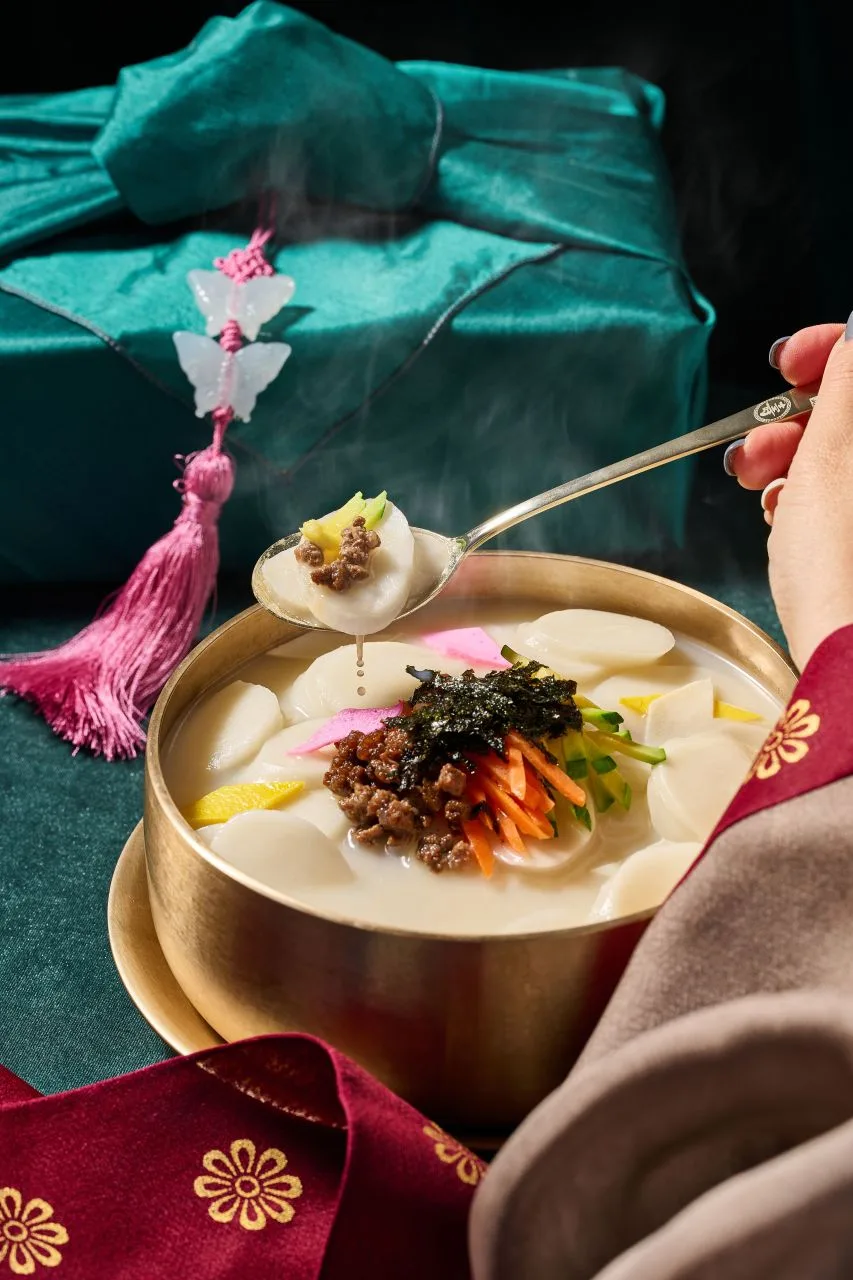
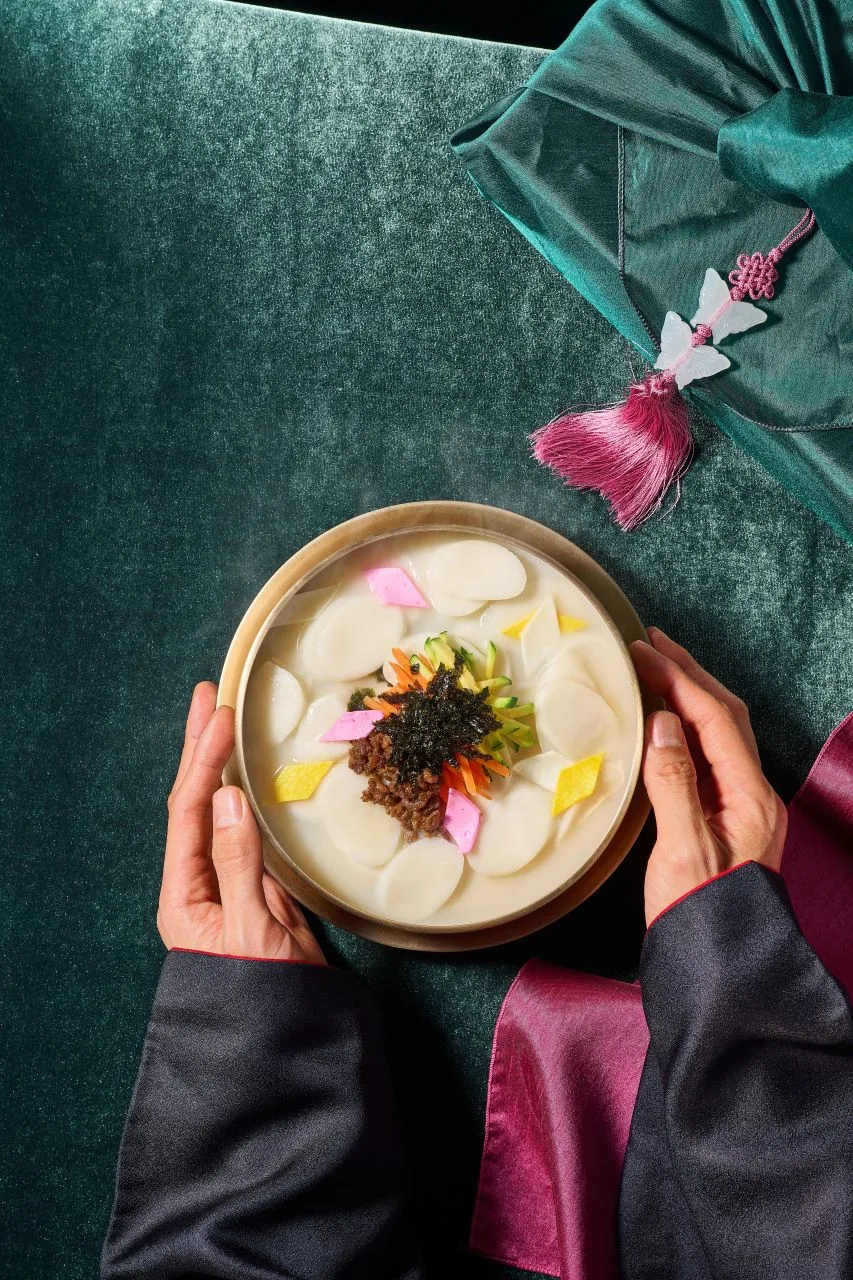
Then everyone eats tteokguk (떡국), a clear beef or anchovy broth full of chewy oval rice cakes. The white slices are cut from long cylinders of rice cake that symbolize a fresh, clean start, and the color stands for purity. There is an old saying attached to the bowl: eat your tteokguk and you turn a year older.
That saying used to be almost literal. Korea ran on a counting system where everyone aged up together on New Year, not on their individual birthdays, so a baby born in late December could be considered two years old a few days later. In June 2023 Korea officially dropped that system for legal and administrative purposes and moved to international age, and overnight a good chunk of the country became a year or two younger on paper. The tradition survived the law, though. People still joke that the tteokguk is what ages them, and grandparents still ask small children how many bowls they have earned. It is one of those cases where the culture kept the poetry after the paperwork moved on.
Games on the floor
Once the food is cleared, the games come out, and they are refreshingly analog. The classic is yunnori (윷놀이), a board game played by throwing four flat wooden sticks and moving pieces based on how they land: one stick up is do (move one), two is gae (two), three is geol (three), four is yut (four), and all four flat is mo (five). It gets loud. Families also fly kites, yeonnaligi (연날리기), and spin wooden tops, paengichigi (팽이치기), on frozen ground. These are the same games you will see demonstrated for free at palaces and folk villages during the holiday, which is one good reason not to hide in your hotel.
Chuseok: the harvest moon
Chuseok is the softer of the two, and if I had to pick a favorite, it would be this one. It arrives in autumn when the rice is heavy in the fields and the moon is at its fullest and brightest of the year. The old idea is simple gratitude: the harvest came in, so you thank the ancestors who made the land and the family who worked it.
The rituals rhyme with Seollal but add a graveyard trip. Along with charye at home, families do seongmyo (성묘), a visit to the ancestral graves, usually paired with beolcho (벌초), the tidying and weeding of those grave mounds. In the weeks before Chuseok you will see families out on hillsides with weed cutters, and highway rest stops stocking gardening gloves. It is quiet, physical, outdoor work, and it is one of the more moving things to witness if you happen across it.
Songpyeon under a full moon
The signature food is songpyeon (송편), small half-moon rice cakes pinched shut around a filling of sesame and honey, sweetened red bean, or chestnut, then steamed over a bed of pine needles that leaves a faint forest scent. The half-moon shape is deliberate. A full moon can only wane, the reasoning goes, but a half-moon is still growing toward fullness, so it points at a brighter future.
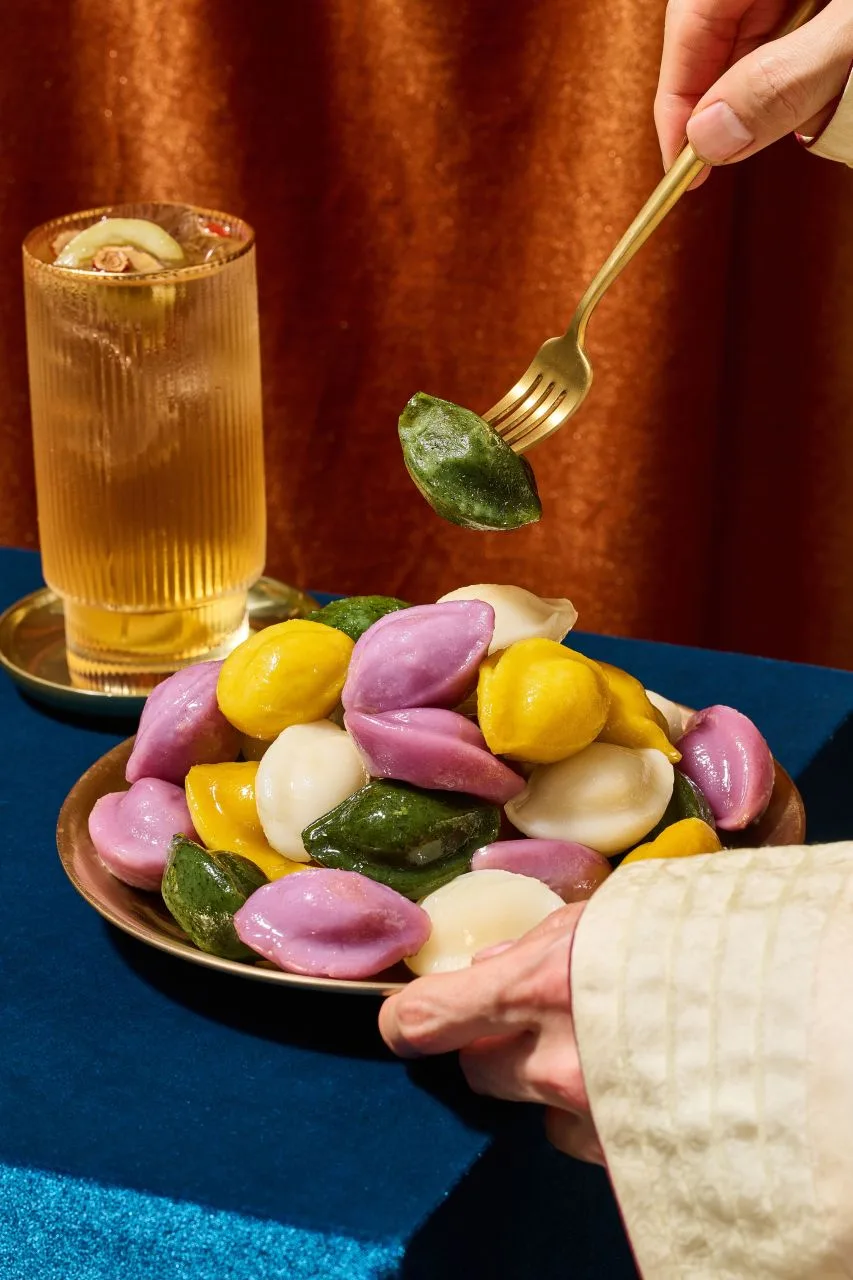
Making songpyeon is a whole-family assembly line on the floor, and it comes with the most quoted saying of the holiday: shape a pretty songpyeon and you will have a pretty daughter, or meet a good spouse. I have watched grandmothers use this line to shame teenagers into folding neater rice cakes, and it works. Alongside the songpyeon you will find towers of jeon, savory pan-fried fritters of everything from scallion to zucchini to fish, plus seasoned vegetables called namul, Korean pear, and hangwa sweets. If any of those names are new to you, our Korean food guide for first-timers breaks down what to actually order.
Dancing in a circle
On Chuseok night, when the moon is up, some regions still perform ganggangsullae (강강술래), a circle dance where women in hanbok link hands and sing under the full moon. It is a UNESCO-listed tradition, and while most modern families just eat and watch TV, you can still catch staged performances at cultural venues during the holiday.
The great migration
Here is the part that catches travelers off guard. Both holidays trigger the largest yearly movement of people in the country, sometimes called minjok daeidong, the great migration of the people. Tens of millions leave the big cities for their hometowns in the space of a day or two.
The result on the roads is punishing. A Seoul-to-Busan drive that normally takes four to five hours can balloon to seven, eight, even ten hours near the peak day, with the Gyeongbu Expressway turning into a slow red river. KTX high-speed train tickets are the smart move, but they sell out fast: Korail opens a special advance booking window weeks ahead, and the good seats vanish within minutes of the window opening. If you plan to travel on the holiday itself, book the instant the tickets go live, or plan to travel a day or two off the peak.
The migration also means the roots of all this go deep. The ancestral rites, the eldest-son hosting, the strict table arrangements: they come from the Confucian social order that shaped Korea for five centuries. If you want the backstory of why filial duty and ancestor veneration sit at the center of these holidays, our Joseon dynasty in ten minutes explainer gives you the frame.
What it means if you are visiting
Now the practical truth: for a few days, a lot of Korea is simply closed. Small restaurants, family-run shops, and neighborhood businesses often shut for the whole block, especially on the main day, because the owners have gone home too. Department stores and big malls typically close for a day or two. Many pharmacies close, though the city designates emergency clinics and on-call holiday pharmacies to cover the gap. Nothing about this is dangerous, but if you show up expecting a normal Seoul, you will spend a hungry afternoon wondering where everyone went.
What stays open saves you. Convenience stores (GS25, CU, 7-Eleven, Emart24) run 24 hours as always, and during the holiday they quietly become your kitchen: hot ramen, gimbap, microwave rice, and steamed buns. Western fast-food chains keep holiday hours, hotel restaurants stay open if you accept the 25,000 to 40,000 won price tag, and the big theme parks like Everland and Lotte World run full schedules. Subways and city buses keep running, sometimes on a slightly reduced timetable.
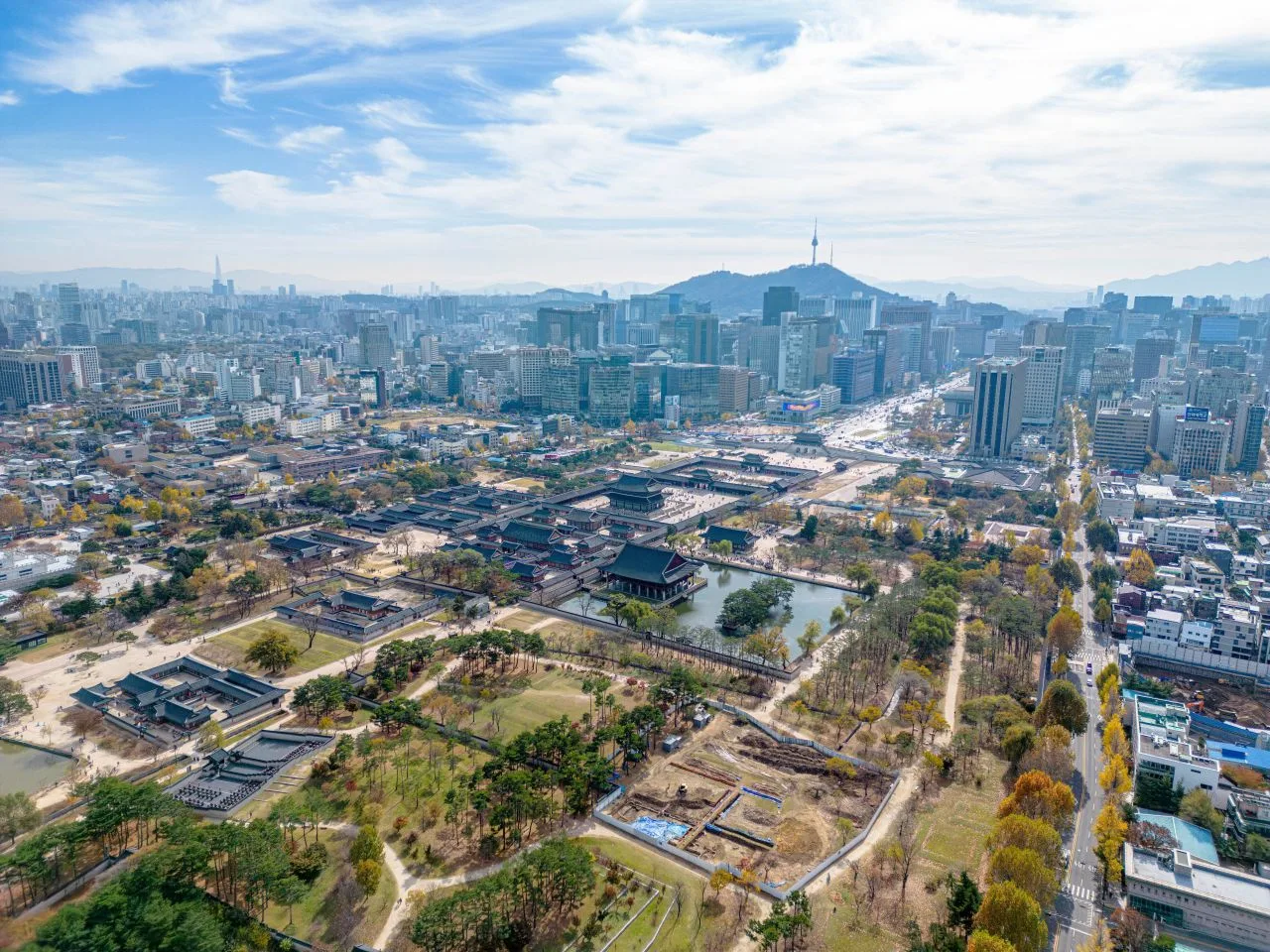
The best-kept secret is the palaces. During both holidays, Seoul's four grand palaces (Gyeongbokgung, Changdeokgung, Changgyeonggung, Deoksugung), along with Jongmyo Shrine and the Joseon royal tombs, throw open their gates for free. Jongmyo, which usually requires a timed reservation, often waives it for the holiday. They lay on free folk-game stations, hanbok experiences, and craft demonstrations, and because half the city has left town, the grounds are calmer than you will ever see them. Rent a hanbok for the day and you get in free year-round anyway. Our five grand palaces guide sorts out which one to prioritize if you only have time for one.
A last word on manners, since these are intimate family days. If a Korean friend or a host family invites you to join their charye or Chuseok table, that is a real honor and worth saying yes to. Bring a small gift, fruit or a nice boxed set works, wait for the eldest person to lift their spoon before you eat, and pour drinks for others rather than yourself. If you want to get the details right, our Korean etiquette dos and don'ts has the full list.
My honest advice: do not treat these dates as ruined travel days. Treat them as the one window when you can watch Korea be itself instead of performing for tourists. Stock the fridge, learn the greeting, wander into a free palace, and let the quiet city surprise you. It is the version of Korea the K-dramas were pointing at the whole time.
Sources
This guide was researched using the references below. Prices and times change, so confirm anything time-sensitive on the official page before you rely on it.
Related guides
- Korean dining etiquette: a guide for foreignersMastering Korean dining etiquette enhances your experience and shows respect for local customs. This guide covers essential table manners, from seating to
- Hanboknam: Your guide to renting hanbok in SeoulDiscover how to rent traditional Korean hanbok at Hanboknam in Seoul, including locations, pricing, and tips for an authentic experience.
- Hanbok rental in Seoul: a guide for visitorsExperience Seoul's heritage by renting a hanbok near Gyeongbokgung Palace. This guide covers top rental shops, costs, and tips for a memorable visit.
- Korean wedding traditions explainedExplore the rich mix of Korean wedding traditions, from the symbolic exchange of wooden ducks to the lively hanbok attire, blending ancient customs with mo
- Korean age and honorifics explainedUnderstanding Korean age systems and honorifics is essential for navigating social interactions in Korea, as they reflect respect and social hierarchy.
- Korean Templestay: A Foreigner's Guide to Temple LifeLive monastic life at a Korean Buddhist temple for a night or two. What you do, which temples run English programs, and how to book on the official site.